
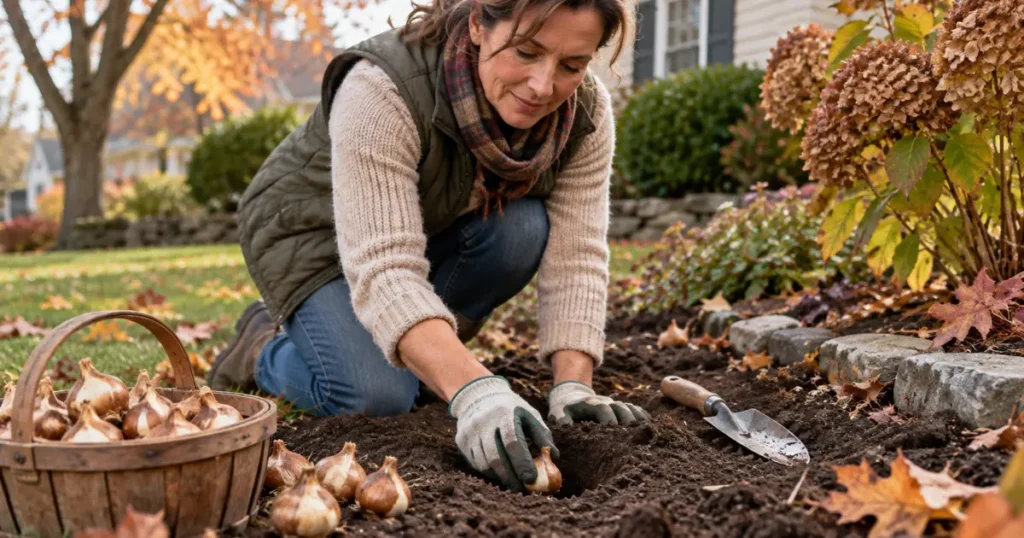
Daffodils are spring-flowering bulbs that are normally planted in fall, but the exact planting window depends on where you garden and how quickly local conditions move toward winter. If you are deciding when to plant daffodil bulbs, the practical goal is to plant after summer heat has eased but early enough for the bulbs to begin establishing roots before winter conditions make planting difficult.
That does not mean every U.S. gardener should circle the same month on the calendar. Frozen ground can arrive relatively early in one region while gardeners elsewhere may have workable soil much later into the season.
This guide explains the normal fall planting window, how timing changes with winter climate, what to do if you are late, whether spring planting can still be worthwhile, and the basic planting steps you need once the timing is right.
Quick Summary
- The normal answer to when to plant daffodil bulbs is fall, after summer heat has eased and before winter prevents practical planting.
- There is no single best planting month for the entire United States; local winter conditions matter.
- In colder areas, bulbs need to go into workable soil before it freezes solid.
- If you are late, planting while the ground is still workable may be better than assuming the bulbs are unusable.
- Spring planting may still be possible with viable bulbs, but do not assume they will flower normally that same spring.
- Plant in a well-drained site and use bulb size—not one universal number—as the main guide to planting depth.
- Place the pointed end upward and the flat basal/root end downward.
Table of Contents
ToggleWhen Is the Best Time to Plant Daffodil Bulbs?
The best general planting season is fall. Plant after the hottest part of summer has passed and while the soil is still workable, giving the bulbs an opportunity to begin root development before winter.
Utah State University Extension advises planting spring-flowering bulbs such as daffodils in fall after soil has cooled from summer heat but before the ground freezes. Its Utah guidance uses several weeks before freeze-up as a practical local benchmark, which should be understood as cold-region guidance rather than a nationwide countdown. Utah State University Extension guidance on fall bulb planting
That distinction is central to understanding when to plant daffodil bulbs. A useful planting date in a cold interior climate may be unnecessarily early—or simply irrelevant—in a mild-winter location where the ground rarely freezes.
Why Daffodil Bulbs Are Usually Planted in Fall
Fall planting gives hardy spring bulbs time to begin developing roots before their spring growth cycle. Illinois Extension describes fall as the prime planting period for hardy spring-flowering bulbs and notes that most can continue to be planted until frozen ground prevents planting. Illinois Extension guidance on planting spring bulbs
Fall also fits the natural seasonal cycle of daffodils. The bulb remains below ground through winter and then produces foliage and flowers as conditions become favorable in spring.
You do not need to chase the earliest possible fall planting date. Planting immediately after bulbs appear for sale is not automatically necessary if your soil and weather are still very warm.
How to Know Your Local Planting Window Has Arrived
The most useful way to decide when to plant daffodil bulbs is to combine the calendar with actual local conditions.
Look for the transition from summer conditions toward consistently cooler fall weather. In areas where the ground freezes, make sure planting happens while the soil can still be worked. If you live where winter is mild and frozen soil is unusual, local Cooperative Extension guidance is more useful than borrowing a cold-climate deadline.
A helpful decision sequence is:
- Has the intense heat of summer passed?
- Are fall conditions established in your area?
- Is the soil suitable for digging rather than frozen or saturated?
- In a cold-winter region, is there still reasonable time before freeze-up?
- Does your bulb supplier provide cultivar-specific planting guidance that changes the general recommendation?
This approach avoids pretending that a date on a national calendar can account for every U.S. garden.
How Daffodil Planting Time Changes by Winter Climate
Regional searches for when to plant daffodil bulbs make sense because winter arrives differently across the United States. A practical framework is to think about the severity and timing of winter conditions rather than relying on state boundaries alone.
USDA Hardiness Zones can be useful background information about winter cold, but they should not be treated as an automatic bulb-planting calendar.
Areas With Earlier Cold and Frozen Ground
Where cold weather arrives earlier and the soil eventually freezes, the usable fall planting window closes sooner.
The priority is to get bulbs into the ground after summer warmth has eased but before frozen soil makes planting impractical. Utah State Extension’s cold-region guidance illustrates this principle by recommending fall planting before freeze-up so spring bulbs can develop roots.
Do not wait for the ground itself to freeze just because the bulbs are hardy. Winter hardiness and the physical ability to dig and establish roots are separate issues.
Areas With Typical Cool-Winter Conditions
In many temperate U.S. areas, gardeners have a reasonably broad fall period in which to plant.
Illinois Extension notes that hardy spring bulbs are primarily fall-planted and that planting can continue while the ground remains unfrozen.
Rather than focusing on whether a particular national month is “correct,” use locally established fall weather and workable soil as your guide. Your county or state Cooperative Extension office can provide more locally relevant timing if autumn conditions are unusually early or late.
Mild-Winter Areas
In mild-winter climates, the “plant before the ground freezes” rule may not provide a useful endpoint because the soil may remain workable through much or all of winter.
An Oregon Extension expert response, for example, recommends waiting for consistently cool late-autumn conditions in its local area and specifically notes that frozen ground is less of a concern there. That is a good illustration of why regional advice should remain regional rather than being turned into one national planting date.
Warm-winter areas can also differ in how reliably particular daffodil types perform, so local Extension or reputable regional horticultural guidance becomes especially valuable. This article does not attempt to turn those differences into a state-by-state cultivar guide.
How Late Can You Plant Daffodil Bulbs?
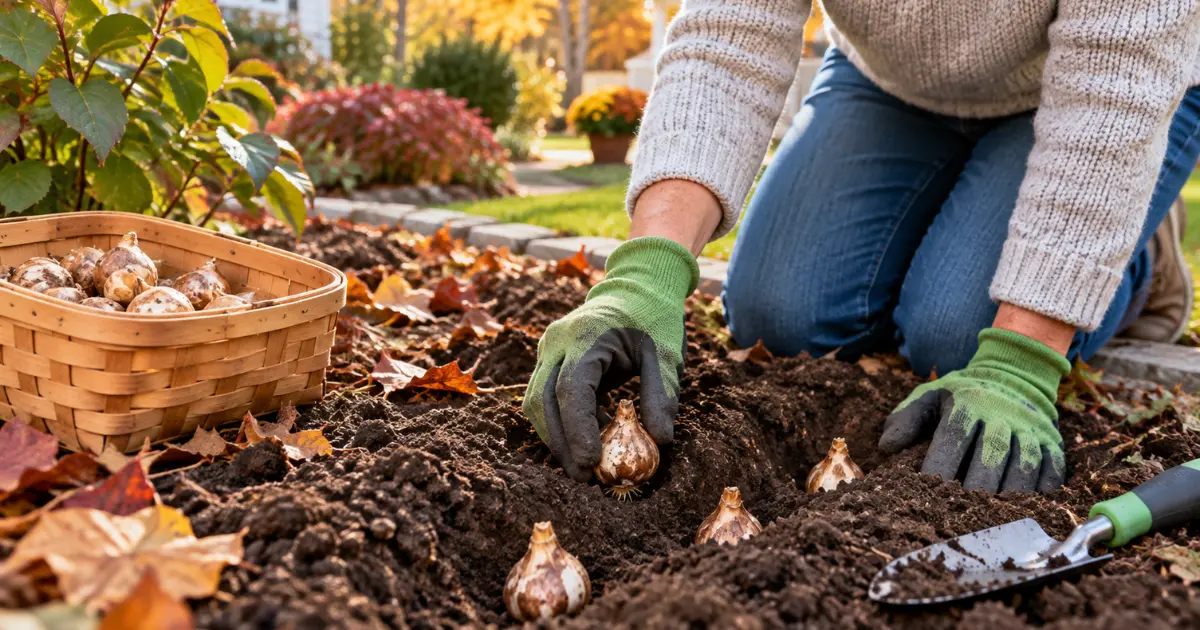
If the normal fall period has slipped by but the soil is still workable, it may not be too late to plant. Do not assume that missing a particular October or November date automatically makes the bulbs useless.
Iowa State University Extension advises gardeners with unplanted spring-flowering bulbs to get them into the ground as long as the soil is not frozen, even when planting has been delayed considerably beyond the ideal local period. Iowa State Extension advice for unplanted spring bulbs
This is an important distinction when deciding when to plant daffodil bulbs late in the year. “Late” does not mean the same thing everywhere.
If you are facing delayed planting:
- check whether the soil is still workable;
- avoid planting into frozen ground;
- avoid forcing bulbs into waterlogged soil simply because winter is approaching;
- plant viable bulbs rather than waiting for an arbitrary future date if your local conditions still allow sensible planting.
Results can be less predictable as planting is delayed, so late planting should not be presented as identical to planting within the normal local window.
Can You Plant Daffodil Bulbs in Spring?
Yes, viable daffodil bulbs can sometimes be planted in spring once the ground is workable, but spring is not the normal planting season and same-season flowering should not be expected.
This situation is different from being a few weeks late in fall. Once spring arrives, the normal fall rooting and winter-exposure period has already passed.
An Extension expert response to a Michigan gardener advises planting forgotten tulip and daffodil bulbs outdoors as soon as thawed soil can be dug, while warning that the bulbs may not flower that spring. Ask Extension guidance on forgotten daffodil bulbs
That is why the answer to when to plant daffodil bulbs remains fall even though spring planting can still be a reasonable salvage option in some circumstances.
What to Expect From Spring-Planted Bulbs
Do not expect spring-planted bulbs to behave exactly like properly established fall-planted bulbs.
Spring-flowering bulbs use their fall and winter period for important root and developmental processes. If bulbs have not experienced suitable prior conditions, flowering in the immediate season may be poor or absent. Extension guidance on forgotten bulbs likewise cautions that spring-planted bulbs may produce foliage without normal same-season flowering.
If healthy leaves emerge, allow them to grow normally. Avoid turning this into a forcing project unless you specifically intend to learn bulb forcing, which is a different gardening process.
What to Do With Bulbs You Forgot to Plant in Fall
First inspect the bulbs. Bulbs that are firm and viable are more promising than bulbs that have become badly shriveled, soft, or rotten.
If it is still winter and the ground remains workable, you may still be dealing with late planting, not true spring planting. Iowa State’s late-season guidance favors planting while soil remains unfrozen rather than deliberately holding viable bulbs for spring.
If spring has arrived and the bulbs are still viable, planting them when the soil can be worked may give them a chance to produce foliage and reestablish their normal cycle, but immediate flowering is uncertain. Do not hold ordinary forgotten bulbs indefinitely in hopes that storage alone will improve them.
When to Plant Daffodil Bulbs in Pots
For outdoor containers, the normal timing is still based around fall planting, but container exposure makes local winter conditions especially important.
When deciding when to plant daffodil bulbs in pots, remember that bulbs in an above-ground container do not receive the same insulation as bulbs surrounded by garden soil.
Illinois Extension notes that containers can be used successfully for bulbs and that larger pots generally provide more winter protection than smaller ones.
That does not mean every planted pot can simply sit fully exposed through every U.S. winter. Container size, material, location, drainage, and local cold all affect winter exposure.
Keep the timing principle simple:
- plant as part of your appropriate fall bulb season;
- use a container with effective drainage;
- recognize that exposed pots experience winter differently from in-ground beds;
- check local Extension guidance if severe freezing is normal where you live.
Detailed pot sizing, winter protection, forcing, and indoor bloom management are separate topics.
How to Plant Daffodil Bulbs
Once you know when to plant daffodil bulbs, the basic planting process is straightforward: choose a suitable drained site, plant at a depth appropriate to bulb size, provide enough space, and orient the bulb correctly.
This section intentionally stays focused on getting the bulbs planted rather than expanding into long-term daffodil care.
Choose a Well-Suited Planting Site
Start with drainage.
Illinois Extension emphasizes good soil drainage for bulbs, while North Carolina State Extension similarly notes that most bulbs perform poorly in persistently poorly drained sites.
Avoid low areas where water remains after rain. If a particular site regularly stays saturated, selecting a better-drained location is often more sensible than trying to compensate after planting.
Spring bulbs can sometimes be planted near deciduous trees because much of their active spring growth occurs before the canopy fully develops, but actual light conditions still matter. This article does not attempt to provide a complete daffodil site-design guide.
If you are still deciding where to create or position your planting area, our guide on how to start a garden explains how to assess sunlight, drainage, water access, and other basic site conditions.
How Deep to Plant Daffodil Bulbs
Use bulb size as the main guide: a common rule of thumb for spring-flowering bulbs is to plant them roughly two to three times as deep as the bulb is tall.
Utah State and Illinois Extension both use this bulb-size-based principle, while also giving approximate depth examples for larger bulbs such as daffodils. Because daffodil bulbs and soil conditions vary, the proportional rule is more useful than pretending one exact measurement fits every bulb.
Check the supplier’s instructions when a particular cultivar or bulb size comes with different planting guidance.
How Far Apart to Plant Daffodil Bulbs
Spacing depends on the size of the bulbs, the cultivar, how quickly you want the planting to appear full, and how much room you want for multiplication over time.
University of Missouri Extension, for example, gives a spacing range for daffodils and explains that closer planting creates a quicker display but can lead to earlier crowding, while wider spacing provides more room over time. That regional publication is useful as an example rather than a universal measurement for every Narcissus cultivar. University of Missouri Extension daffodil planting guidance
For beginners, the practical rule is to avoid packing bulbs together without considering their eventual growth, and to follow cultivar or supplier recommendations when available.
Which Way Should a Daffodil Bulb Face?
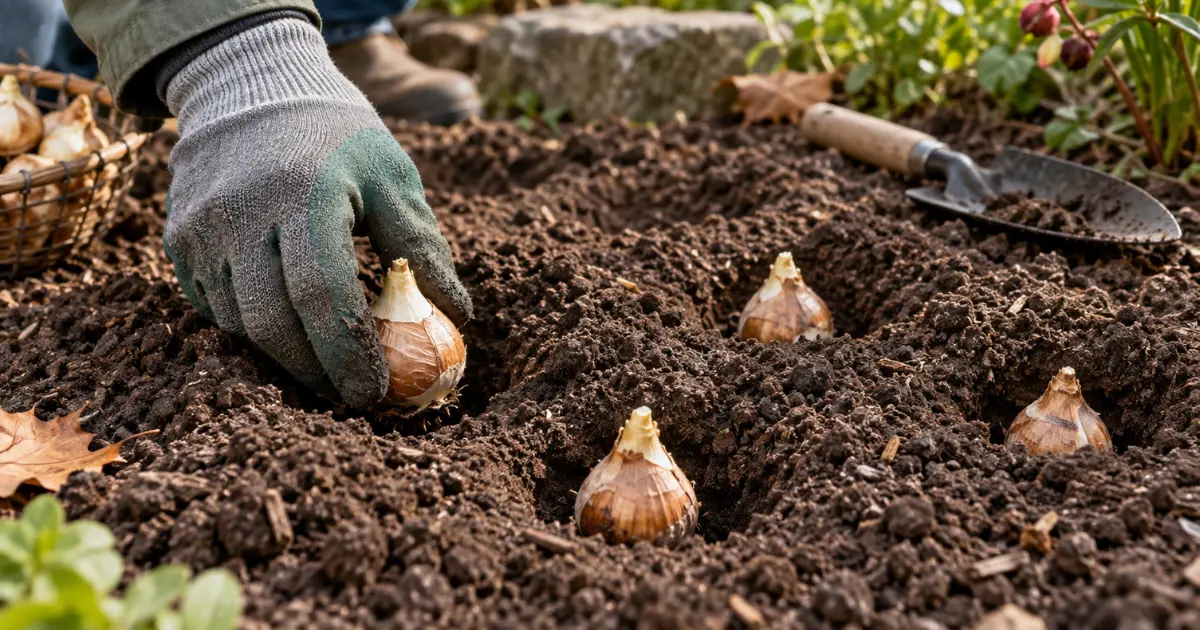
Plant the pointed or nose end upward and the flat basal/root plate downward.
Illinois Extension gives the same orientation for daffodils, tulips, and hyacinths.
Do not overcomplicate this step. Once the bulb is placed correctly, cover it with soil and finish planting.
Planting Daffodil Bulbs in Fall: A Simple Checklist
Once you understand when to plant daffodil bulbs, use this as a final check rather than another set of instructions:
- Timing: Your local fall planting window has arrived.
- Weather: Summer heat has eased and winter has not made the ground unworkable.
- Site: You have chosen a location appropriate for daffodils.
- Drainage: Water does not routinely sit around the planting area.
- Depth: You have used bulb size and any supplier guidance to determine planting depth.
- Spacing: Bulbs have enough room for the intended planting effect and future growth.
- Orientation: The pointed end goes up and the basal/root end goes down.
- Bulb condition: Bulbs are firm enough to plant and do not show obvious rot.
- Local exception: If your climate is unusually mild or severe, you have checked locally relevant guidance rather than relying on a national month.
The purpose of the checklist is simply to confirm that the key decisions have been made before the bulbs go into the ground.
Common Daffodil Bulb Planting Mistakes
- Treating one month as correct for the entire United States.
Local winter conditions vary too much for one national calendar date to fit every garden. - Planting without considering whether the site drains well.
A poorly drained root zone can create problems for bulbs regardless of how carefully they were planted. - Waiting unnecessarily after the ideal window has passed.
If bulbs are still viable and the ground remains workable, late planting may still be practical. - Assuming every bulb needs exactly the same planting depth.
Use bulb size and supplier guidance rather than treating one measurement as universal. - Planting bulbs upside down.
The pointed end belongs upward and the basal/root plate downward. - Crowding bulbs without considering the future planting.
Very tight spacing may create an immediate display but can produce crowding sooner. - Treating spring planting as identical to fall planting.
A forgotten viable bulb may still be planted in spring, but its immediate growth and flowering expectations are different. - Assuming bulbs are unusable simply because the calendar says they are “late.”
Soil condition and local winter progress matter more than an arbitrary deadline.
These mistakes are easier to avoid when when to plant daffodil bulbs is treated as a local seasonal decision rather than a fixed nationwide date.
Frequently Asked Questions About Planting Daffodil Bulbs
What month is best for planting daffodil bulbs?
Fall is the normal planting season, but there is no single best month for the entire United States. In cold-winter regions, planting needs to occur while soil is still workable before freeze-up; mild-winter areas can have a later practical window. Use local conditions and Extension guidance rather than a universal month.
How late can you plant daffodil bulbs?
You may still be able to plant them later than planned while the soil remains workable and unfrozen. Iowa State Extension specifically advises late-season planting of viable spring bulbs while unfrozen soil can still be worked.
Can I plant daffodil bulbs in spring?
Yes, viable bulbs can sometimes be planted when spring soil becomes workable, but fall remains the normal planting season. Spring-planted bulbs may fail to flower normally that same year, depending on their previous storage and cold exposure.
Can you plant daffodil bulbs in March?
Sometimes, but March does not mean the same thing horticulturally across the United States. In one location the ground may still be frozen; in another, spring may be well underway. Check whether the soil is workable, whether the bulbs remain viable, and understand that spring planting may not produce normal flowers immediately.
How deep should daffodil bulbs be planted?
A practical general rule is to plant spring bulbs roughly two to three times as deep as the bulb is tall, while checking cultivar or supplier instructions when provided. Larger daffodil bulbs may therefore be planted more deeply than small bulbs.
Can I plant daffodil bulbs now?
The answer depends on your current season and local conditions. To decide when to plant daffodil bulbs right now, ask whether you are still within a workable fall or early-winter period, whether the soil is frozen or saturated, or whether spring has already arrived. If conditions are highly regional, check your local Cooperative Extension rather than relying on a generic national date.
Plant at the Right Time for a Better Spring Display
The most useful rule for when to plant daffodil bulbs is simple: think in terms of fall conditions rather than one nationwide month.
Plant after summer warmth has eased, give bulbs the opportunity to establish before winter where possible, and get them into workable soil before freezing prevents planting in colder regions. If you are late, do not automatically assume the bulbs are lost. If spring has already arrived, viable bulbs may still be worth planting, but immediate flowering should not be promised.
Once the timing is right, the planting itself is straightforward: choose a drained site, use bulb size to guide depth, leave appropriate space, and place the pointed end up.
That combination of sensible timing and basic planting technique gives daffodil bulbs a sound start toward the spring display you planted them for.

