
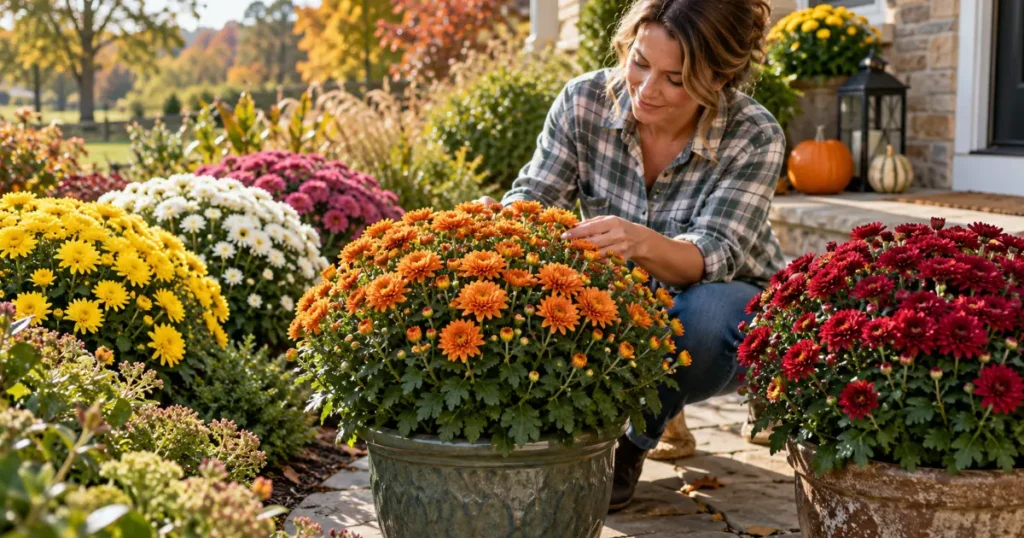
Mums can look simple at first glance, but successful care depends on more than keeping the flowers watered. If you are learning how to care for mums, start by identifying what kind of mum you have, then match its light, moisture, drainage, and seasonal care to the way it is being grown.
Garden or hardy mums and florist mums are not interchangeable, and a plant being sold in a pot does not tell you which type it is. That distinction affects how you should think about outdoor planting, indoor conditions, fall displays, and whether the plant may return in future years.
The most useful approach is to observe the plant and its environment rather than follow rigid watering, fertilizer, frost, or pruning schedules.
Quick Summary
- Good mum care starts with knowing whether you have a garden/hardy mum or a florist mum.
- Outdoor garden mums generally perform best with ample direct sunlight, while florist mums kept indoors need appropriately bright indoor conditions.
- Keep the root zone adequately moist but not waterlogged; check actual conditions rather than watering on a fixed schedule.
- Container-grown mums can dry differently from mums planted in garden soil and may need more frequent monitoring.
- Good drainage matters in both beds and containers.
- Mums are short-day, long-night flowering plants, so disruptive artificial light at night can affect flower-bud development.
- Whether a mum returns next year depends on its type, establishment, climate, site, and growing situation.
Table of Contents
ToggleKnow What Type of Mum You Have
Before deciding how to take care of mums, determine whether the plant is primarily a garden/hardy mum or a florist mum. That distinction is more useful than simply asking whether the plant came in a pot.
Garden or Hardy Mums
Garden or hardy mums are the type to consider when you want mums to become established outdoor garden plants rather than function only as a temporary display.
Even then, “hardy” should not be interpreted as a guarantee that every plant will return in every U.S. garden. Winter survival depends on several interacting factors, including climate, site conditions, how well the plant became established, and the particular mum being grown.
Timing matters as well. A hardy mum that has had time to establish before winter is in a different situation from one purchased in full bloom and planted late in fall.
Florist Mums
Florist mums are commonly grown for display and should not automatically receive the same long-term garden advice as established hardy mums.
If a florist mum is being kept indoors, give it appropriately bright indoor conditions and manage moisture according to the pot and growing medium. Do not simply transfer outdoor garden-mum recommendations to an indoor plant.
The plant can still be cared for and enjoyed well, but its likely future should be judged according to what type it is rather than assuming all mums behave as permanent outdoor perennials.
Why “Ptted” Does Not Always Mean “Florist”
“Potted” describes where the mum is growing, not what type of mum it is.
A garden mum can be grown in a container. A florist mum can also arrive in a container. That is why potted mum care has two separate questions:
- What kind of mum is this?
- What changes because its roots are confined to a container?
Keep those questions separate throughout your care routine.
How Much Sun Do Mums Need?
Light is an important part of how to care for mum plants, but outdoor and indoor situations should not be treated as identical.
Sunlight for Outdoor Garden Mums
Outdoor garden mums generally perform best with ample direct sunlight.
A sunny position supports healthy growth and flowering, but avoid turning this into a rigid hour-count rule for every garden. Light exposure interacts with climate, heat, moisture, neighboring plants, structures, and seasonal conditions.
When choosing an outdoor site, look for a location that provides strong light without ignoring the rest of the plant’s needs, especially drainage and moisture.
If a mum is growing weakly or flowering poorly, light is one of the first conditions worth checking, but it should not be assumed to be the only possible cause.
Light for Indoor Florist Mums
A florist mum being displayed indoors needs appropriately bright indoor conditions.
That is different from placing a garden mum outdoors in full sun. Indoor light is usually much less intense than outdoor sunlight even when a room seems bright to us.
Place indoor florist mums where they can receive useful natural light without automatically applying outdoor exposure advice.
Artificial light also matters when flowering is involved. Mums respond to periods of darkness as part of flower-bud development, so strong artificial lighting during the night can interfere with that natural signal.
How to Water Mums
There is no responsible universal answer such as “water mums every day” or “water them twice a week.”
Learning how to care for mums means learning to judge moisture from the plant’s actual growing conditions.
Weather, soil, container size, exposure, plant size, and whether the mum is growing in the ground or a pot all affect how quickly the root zone dries. For a more detailed answer on watering frequency, see our guide on how often to water mums.
How to Tell When Mums Need Water
Check the growing medium rather than the calendar.
The goal is to provide adequate moisture without leaving the root zone continually saturated. Soil that is drying appropriately may need water; soil that remains wet should not automatically receive more simply because it is the usual watering day.
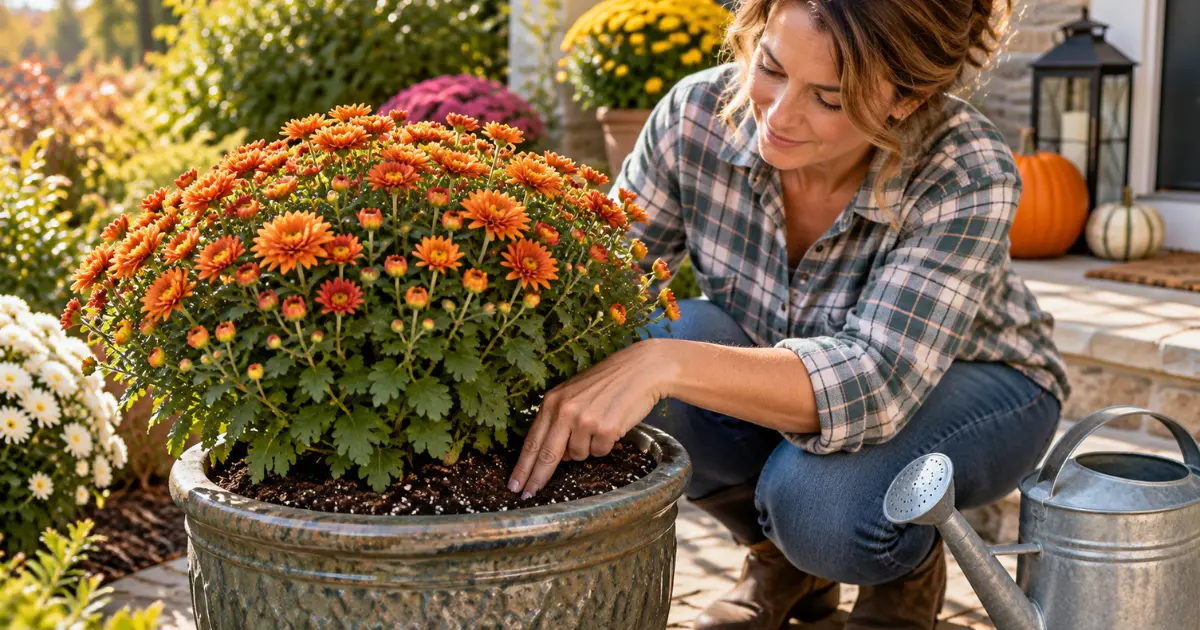
Pay attention to:
- how the soil or potting medium feels;
- whether weather has been hot, cool, rainy, dry, or windy;
- whether the plant is in a container or the ground;
- how quickly that particular root zone normally dries.
Observation is more reliable than memorizing one schedule.
Watering Mums in Pots
Container-grown mums deserve especially close attention because their root zone is limited to the growing medium inside the pot.
A container may dry more quickly than surrounding garden soil, particularly in exposed conditions. But that does not mean every potted mum should automatically be watered every day.
Check the pot first.
When watering is needed, the goal is to moisten the root zone while allowing excess water to drain rather than leaving the plant standing in continually saturated medium.
Avoiding Both Drought Stress and Waterlogging
Two opposite mistakes can produce an unhealthy plant:
Too little moisture: the root zone dries excessively and the plant becomes stressed.
Too much moisture: poor drainage or repeated unnecessary watering keeps the roots excessively wet.
Do not interpret “mums like moisture” as “mums should stay waterlogged.”
If a plant is struggling, inspect the soil before assuming the answer is simply more water.
Best Soil and Drainage for Mums
Mums need a root environment that provides moisture while still allowing excess water to move away.
Drainage is therefore just as important as watering.
Mums Growing in Garden Beds
For mums planted in the ground, choose a site where water does not routinely remain around the roots.
A location that stays persistently saturated after rainfall can create a very different root environment from a well-drained garden bed.
Do not try to compensate for fundamentally poor drainage by simply changing the watering schedule. Site conditions matter.
Mums Growing in Containers
Container-grown mums also need a root zone that drains properly.
Use a container and growing medium that allow water to move through rather than remain trapped around the roots. Drainage openings should remain functional.
Do not let decorative presentation hide a drainage problem. If a pot sits inside another container or catches water underneath, check that excess water is not being held around the root system for long periods.
How to Feed Mums
Mums may benefit from appropriate nutrition during active growth, but feeding should not become a rigid universal schedule. If feeding is appropriate for your plant, our guide to organic fertilizer for plants explains the main fertilizer options and how to use them responsibly.
The right approach depends on the type of mum, where it is growing, its stage of growth, and what nutrients are already available in the root zone.
Avoid assuming that additional fertilizer is always the answer to:
- poor flowering;
- weak growth;
- yellowing foliage;
- stress after purchase;
- problems caused by inadequate light or poor watering.
Fertilizer cannot correct an unsuitable site, waterlogged roots, insufficient light, or a plant that is struggling because of environmental stress.
For general mums care, treat feeding as one part of the overall growing environment rather than the main driver of plant health.
How to Care for Mums in Pots
Potted mums need the same basic resources as mums growing in garden soil, but the container changes how those resources behave.
The most important difference is that the root system is confined.

What Changes When Mums Grow in Containers
A pot contains a much smaller root zone than a garden bed.
That affects:
- how quickly moisture conditions change;
- how much room roots have;
- how exposed the root system is to outdoor temperature changes;
- how dependent the plant is on the conditions inside that specific container.
This is why how to take care of mums in pots cannot be reduced to “water them more.”
The entire container environment matters.
Container Placement, Drainage, and Root Space
Place the pot where the particular mum receives appropriate light and where you can monitor it easily.
Make sure water can drain.
Also pay attention to whether the plant has enough root space. A plant growing vigorously in a relatively small volume of medium may behave differently from a plant established in open garden soil.
You do not need to disturb or repot every newly purchased fall mum automatically. The point is simply to recognize the limits of the container when assessing moisture, growth, and long-term plans.
Why Potted Mums Can Face Different Cold Exposure
A mum growing in an above-ground container experiences cold differently from a mum whose roots are surrounded by garden soil.
That matters if you hope to keep the plant beyond its fall display.
Do not assume that a mum considered hardy in the landscape can automatically remain in any exposed pot through winter in every U.S. climate. Container size, exposure, mum type, establishment, and local winter conditions all affect the situation.
Detailed container overwintering methods are a separate subject, but recognizing this difference is essential.
Caring for Mums Planted in the Ground
Once a mum is planted in a garden bed, its root system can begin establishing in a larger volume of soil than it had in a nursery pot.
If you are creating the bed itself for the first time, our guide on how to start a garden covers site selection, soil preparation, plant choice, and the basic planting process.
That can make moisture conditions more stable than in a small container, but the same basic care principles still apply: suitable light, adequate moisture, and good drainage.
Establishment timing is especially important for hardy garden mums intended to return.
A mum planted with more of the growing season available before winter generally has more opportunity to establish than one planted very late in fall.
That does not mean a late-planted hardy mum is guaranteed to fail. It means its situation is different and its winter return may be less reliable.
How to Keep Mums Blooming
Keeping mums attractive in bloom is not about finding one trick.
Flowering depends on the plant’s type, light environment, overall health, moisture conditions, and natural flowering cycle.
The Main Conditions That Support Flowering
Start with the fundamentals:
- appropriate light;
- adequate but not excessive moisture;
- a healthy root zone;
- suitable general nutrition;
- protection from avoidable stress.
Do not assume that adding extra fertilizer or extra water will automatically produce more flowers.
If flowering is disappointing, first look at the entire care environment.
Why Long Nights Matter for Flowering
Mums are often described as short-day plants, but for beginners the important idea is that long, uninterrupted nights help trigger flower-bud development.
That means nighttime lighting can matter.
A mum growing near strong porch lighting, security lights, landscape lighting, or another source of repeated artificial nighttime illumination may not experience the same uninterrupted darkness as a plant in a naturally dark location.
Do not interpret this as a reason to keep mums shaded during the day. Daytime sunlight and nighttime darkness are separate parts of the flowering response.
The Role of Spent Flowers and General Maintenance
Removing spent flowers can help keep a blooming plant looking tidy and allows you to inspect it regularly.
For a general care routine:
- remove obviously faded or declining flower material where appropriate;
- clear away badly damaged growth;
- watch for changes in foliage or moisture;
- avoid rough handling of healthy buds and stems.
Detailed deadheading methods belong in a dedicated guide. For everyday fall mums care, basic cleanup and observation are usually enough.
Pinching and Basic Maintenance
Pinching is mainly used earlier in the growth cycle to encourage branching and a fuller plant shape.
It should not be confused with simply removing old flowers from a mum already in bloom.
Why Pinching Can Encourage Bushier Growth
Removing growing tips at an appropriate stage can encourage the plant to produce more branching rather than continuing as a smaller number of long stems.
That is one reason garden mums may be managed during active vegetative growth before the flowering season.
Why Pinching Timing Matters
Pinching should not continue indefinitely.
Eventually the plant needs to move from producing vegetative growth toward developing flowers. Because climate, cultivar, and growing conditions vary, one nationwide calendar date for stopping pinching would be misleading.
The useful beginner principle is simple:
Pinching is an earlier growth-management technique, not something to continue automatically once flower-bud development and the flowering season are approaching.
Fall Mums Care
Fall is when many gardeners buy mums for porches, patios, entryways, and garden beds.
At that point, the plant may already be flowering heavily, and its needs are different from those of a young mum actively establishing earlier in the growing season.
Keeping Fall Mums Healthy Through the Display Season
For practical fall mums care, concentrate on maintaining the conditions the plant already needs:
- appropriate light;
- regular moisture checks;
- effective drainage;
- basic cleanup of fading material;
- protection from avoidable environmental stress.
A flowering mum in a container may need closer moisture monitoring than a plant established in the ground.
Do not compensate for a fading display by automatically increasing watering or fertilizer. Flowers naturally age, and seasonal conditions continue to change.
What Changes as Temperatures Cool
As fall progresses, water use can change.
Cooler weather may reduce how quickly soil or potting medium dries compared with hotter conditions. Continue checking moisture rather than maintaining a watering routine developed during warmer weather.
Cold exposure also becomes increasingly relevant, particularly if you want the plant to survive beyond the fall display.
This is where the distinction between a temporary frost event and true winter hardiness becomes important.
Temperature, Frost, and Fall Weather
Mums are strongly associated with fall, but that does not mean every mum has identical tolerance of cold weather.
How Mums Respond to Cool Fall Conditions
Cool fall conditions are part of the normal seasonal environment in which mums are commonly grown and displayed.
However, plant response depends on type, cultivar, growing situation, and the severity of the weather.
Avoid relying on one universal temperature that supposedly applies to every mum in every U.S. garden.
A flowering mum in a container on an exposed porch is also in a different situation from an established hardy mum rooted in the ground.
Why Frost Tolerance and Winter Hardiness Are Different Questions
A plant’s response to a short period of frost is not the same question as whether it can survive an entire winter and return the following growing season.
Winter survival depends on several factors:
- mum type;
- how well established the plant is;
- regional climate;
- garden site;
- drainage;
- whether it is growing in the ground or a container.
Do not use short-term survival after a cold night as proof that the plant will reliably overwinter.
Will Mums Come Back Next Year?
Some mums may return in future years, but no responsible answer is simply “yes” or “no.”
Why Mum Type Matters
Garden or hardy mums are the appropriate group to consider when perennial return is the goal.
Florist mums should not automatically be assumed to behave like established hardy landscape mums.
That is why identifying the type near the beginning of your care process matters so much.
Why Establishment, Climate, and Site Matter
Even a hardy garden mum’s return is influenced by how well it established before winter.
A plant that has had substantial time to root into suitable garden soil is in a different position from a mum placed in the ground very late in the season.
Climate and site conditions matter as well. Hardiness cannot compensate for every combination of poor drainage, weak establishment, severe exposure, or unsuitable local conditions.
This is why spring establishment can give hardy garden mums an advantage: it provides more time for the root system to develop before the plant faces winter.
Basic Winter Care
If you want a hardy garden mum to return, begin with the basics:
- identify the mum correctly;
- use an appropriate garden site;
- maintain good drainage;
- consider how well established the plant is;
- account for your local winter conditions.
Avoid applying one universal winter recipe across the United States. Detailed overwintering methods, including region-specific protection strategies, deserve their own treatment.
Common Mum Care Problems and What to Check First
Visible symptoms can have more than one cause. Start by inspecting basic growing conditions rather than jumping immediately to a diagnosis.
- Wilting → Possible care factors: dry root zone, excessive moisture, weather stress, or other plant-health problems. First thing to inspect: actual soil or potting-medium moisture.
- Drying or browning foliage → Possible care factors: moisture stress, seasonal decline, weather exposure, or other damage. First thing to inspect: whether the root zone has been too dry, too wet, or changing rapidly.
- Weak flowering → Possible care factors: inadequate light, nighttime light disruption, general stress, or natural flowering stage. First thing to inspect: daytime light and whether the plant receives uninterrupted darkness at night.
- A pot that dries unusually quickly → Possible care factors: limited root-zone volume, exposed placement, weather, or a vigorous root system. First thing to inspect: how much growing medium remains available and how quickly it actually dries after watering.
- Decline after cold weather → Possible care factors: frost injury, exposure, mum type, container conditions, or winter hardiness. First thing to inspect: when the damage appeared and whether the plant was in a pot or established in the ground.
If symptoms are severe, spreading, or clearly associated with pests or disease, more specific diagnosis may be needed.
Common Mum Care Mistakes
- Treating every mum as the same kind of plant.
Garden/hardy mums and florist mums can have different long-term expectations. - Assuming “potted” means “florist.”
A pot describes the growing situation, not the mum type. - Watering by a rigid schedule.
Moisture needs change with weather, container conditions, and the growing environment. - Keeping the root zone constantly wet.
Adequate moisture and waterlogging are not the same thing. - Ignoring drainage.
Good watering practice cannot compensate for a root zone that traps excess water. - Giving an indoor florist mum the same light advice as an outdoor garden mum.
Indoor and outdoor growing environments need to be considered separately. - Assuming every fall mum will return next year.
Type, establishment, climate, site, and growing situation all matter. - Using one frost temperature as a universal rule.
Mum response to cold cannot be reduced to one number for every cultivar and location. - Pinching without considering growth stage.
Pinching can encourage branching earlier in growth, but it should not continue without regard to flower-bud development. - Ignoring artificial light at night.
Because long nights are involved in flowering, disruptive nighttime lighting can interfere with the plant’s normal flowering signals.
Frequently Asked Questions About Mum Care
How often should you water mums?
Do not water mums according to one universal schedule. Check soil or potting-medium moisture and consider weather, container exposure, plant condition, and whether the mum is growing in a pot or garden soil.
Do mums need full sun?
Outdoor garden mums generally perform best with ample direct sunlight. Indoor florist mums need appropriately bright indoor conditions, so indoor and outdoor light advice should not be treated as identical.
How long do mums last?
That depends on what you mean. A flowering display naturally changes as individual blooms age, while the lifespan of the plant depends on whether it is a florist mum or hardy garden mum and on its growing conditions. There is no single useful lifespan that applies to every mum.
Can mums survive frost?
Some mums can tolerate periods of cool or frosty fall weather, but short-term frost exposure is not the same as winter hardiness. Avoid using one universal temperature to predict survival.
Do mums come back every year?
Some hardy garden mums may return when the plant is well established and local climate and site conditions are suitable. Florist mums and recently planted fall mums may have different prospects, so perennial return should not be guaranteed.
Can mums be kept indoors?
Florist mums can be kept indoors for display when given appropriately bright indoor conditions and careful moisture management. A garden mum brought indoors should not automatically be expected to behave exactly like a florist mum, because the plant type and intended growing situation still matter.
Resources and References
The following university Extension resources provide additional research-based information about chrysanthemum care, flowering, container care, and winter considerations.
- Iowa State University Extension — Growing Chrysanthemums
- Illinois Extension — Growing and Caring for Fall Mums
- Iowa State University Extension — Care of Potted Flowering Mums
- Iowa State University Extension — Frost Heaving and Winter Plant Protection
Give Your Mums the Care They Need
Learning how to care for mums becomes much easier once you stop treating every plant and every growing situation the same way.
First identify whether you have a garden/hardy mum or a florist mum. Then give the plant light appropriate to its setting, check moisture rather than following a rigid watering calendar, maintain good drainage, and adjust your routine as weather and seasons change.
If flowering matters, remember that overall plant health and long, uninterrupted nights both play a role. If you hope the plant will return next year, consider its type, establishment, climate, site, and whether it is growing in the ground or a container.
The most reliable mum care comes from observing the plant in front of you and responding to its actual conditions rather than forcing it into a one-size-fits-all schedule.

