
Geraniums are popular for a reason: they bring strong color to containers, window boxes, and garden beds without requiring highly specialized care. But good geranium care is less about following a rigid schedule and more about giving the plant suitable light, well-drained soil, sensible watering, appropriate feeding, and regular observation.
This guide focuses mainly on the common Pelargonium-type plants sold in the United States as bedding or container “geraniums.” You will learn how to manage light, soil, water, fertilizer, flowering, pruning, pots, seasonal changes, and common symptoms without assuming that every climate or every plant called a geranium behaves exactly the same way.
Quick Summary
- Most common bedding and container geraniums are Pelargonium, not the hardy perennial plants in the genus Geranium.
- Good geranium care starts with strong light, well-drained soil or potting mix, and watering based on actual moisture rather than a fixed calendar.
- Containers usually dry faster than garden beds, so potted plants need more frequent checking.
- Regular feeding can support growth and flowering, especially in containers, but more fertilizer is not automatically better.
- Removing spent flowers can support continued blooming, while pruning or pinching can help manage leggy growth.
- Common bedding geraniums are frost-tender, so winter treatment depends on local climate and whether you want to overwinter plants indoors.
- Yellow leaves, wilting, poor flowering, or spotting are symptoms to investigate, not diagnoses by themselves.
Table of Contents
ToggleUnderstanding the Geranium You Are Growing
Common Garden Geraniums vs Hardy Geraniums
The plant sold at a garden center as a “geranium” is often not a true Geranium botanically. Iowa State University’s guide to growing annual geraniums explains that common annual geraniums belong to the genus Pelargonium, while true geraniums belong to the genus Geranium and are generally hardy perennials with different growth habits and care needs.
For this article, “geranium” mainly means the familiar Pelargonium-type plant used in summer beds, patio pots, window boxes, and hanging baskets. That distinction matters because advice written for hardy cranesbill geraniums may not fit a zonal or bedding Pelargonium.
What This Geranium Care Guide Covers
This geranium care guide concentrates on the broad needs of common bedding and container Pelargoniums. Zonal geraniums are the clearest example, but many of the same basic principles apply to other commonly grown Pelargonium types.
Specialized plants such as Regal or Martha Washington geraniums and ivy geraniums can differ in growth habit, heat response, and use. Rather than forcing every type into one formula, treat this guide as the beginner foundation and check type-specific guidance when you know you are growing a specialized group.
How Much Sun Do Geraniums Need?
For most common bedding geraniums, strong light supports compact growth and good flowering. Iowa State recommends full sun for annual geraniums and defines that in its Iowa guidance as at least six hours of direct sun per day. It also notes that less light can reduce flowering.
That is a useful reference, not a rule that every U.S. gardener should apply without considering climate. A site that is comfortable in a northern summer can be much hotter and more stressful in a southern or reflected-heat location. Good geranium care means watching how the plant responds to the actual combination of light, temperature, wind, and moisture at your site.
Full Sun vs Partial Shade
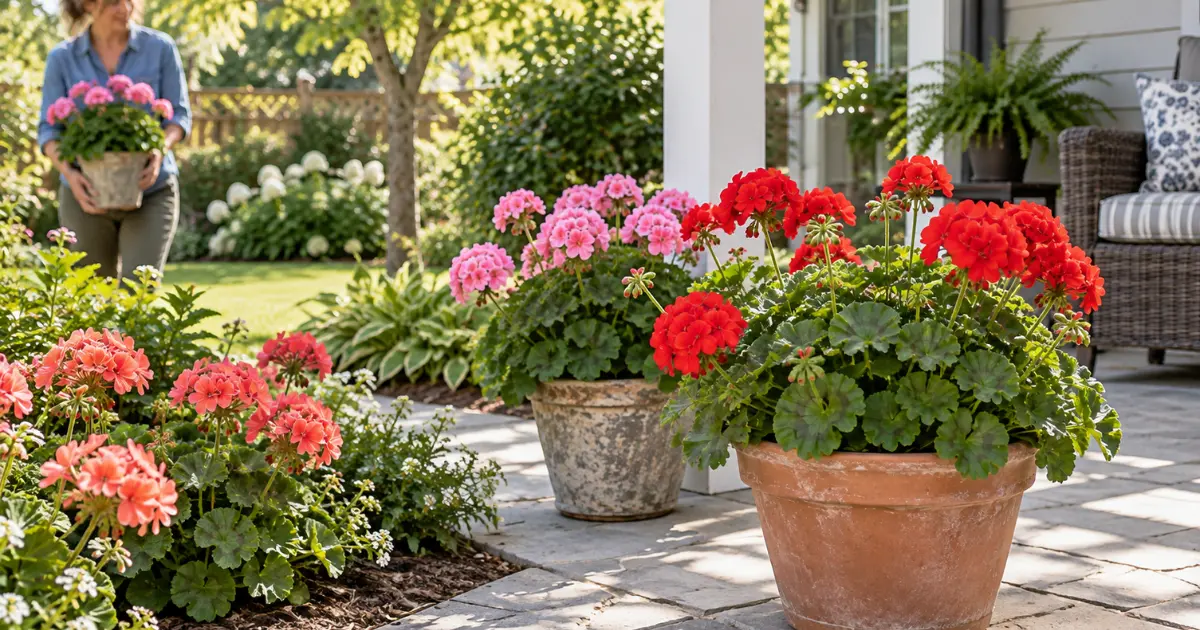
A bright site with substantial direct sun is usually a good starting point for common zonal geraniums. Partial shade can still support healthy foliage, but plants receiving insufficient light often flower less and may stretch toward brighter conditions. Illinois Extension also lists full sun and well-drained soil among the basic growing conditions for zonal geraniums. Illinois Extension’s geranium guidance
If you garden in a very hot, exposed location, judge the plant rather than relying only on an hour count. A geranium showing persistent stress during intense heat may need a less punishing position, while a plant with weak, stretched growth and few flowers may need stronger light. Check moisture and drainage as well, because light and water stress can overlap.
Signs Your Geranium May Not Be Getting the Right Light
Possible signs of insufficient light include long, weak stems, wider spacing between leaves, leaning toward the light, and reduced flowering. Iowa State also notes that geraniums kept in warm, poorly lit indoor conditions can become lanky.
Before moving the plant, look at the whole situation. Wilting or weak growth can also relate to moisture, root health, weather, or other stresses, so light should be assessed alongside the root zone rather than in isolation.
Temperature, Humidity, and Air Circulation
Common Pelargonium geraniums are frost-tender. Iowa State recommends planting annual geraniums outdoors only after frost danger has passed and notes that a hard frost kills outdoor plants. That makes local frost risk more useful than one nationwide planting date.
Temperature also changes how quickly soil and potting mix dry. Hot, windy conditions can increase water loss, while cool, damp conditions slow drying. Adjusting care to weather is more reliable than keeping the same routine all season.
Avoid treating one temperature threshold as a universal geranium care rule. Cultivar, acclimation, container size, exposure, and local climate all influence how a plant responds.
Instead, watch for weather-related changes. During hot or windy periods, containers may need more frequent moisture checks. When cool, wet weather arrives, the same plant may use water more slowly, making overwatering easier.
Good air movement helps foliage dry and reduces the prolonged wet, crowded conditions associated with some geranium diseases. Iowa State notes that bacterial leaf spot is more common in warm, wet weather and crowded plantings.
Give plants enough space for air to move around them, avoid keeping foliage needlessly wet, and remove severely damaged or decaying material. Humidity alone does not diagnose a disease, but poor airflow plus persistent leaf wetness is a reason to pay closer attention.
Best Soil for Geraniums
Geranium roots perform best in a root zone that holds enough moisture to support growth but still drains well. Both Iowa State and Illinois Extension describe common geraniums as preferring fertile, moist, well-drained soil.
Drainage is central to geranium care because chronically saturated roots can contribute to yellowing, wilting, and root or stem problems. Soil or potting mix should not stay waterlogged for long periods.
Geraniums in Garden Beds
In beds, start with soil that drains reasonably well. If the site stays saturated after rain, solve the drainage issue rather than assuming fertilizer or more frequent cultivation will compensate.
Organic matter can help some soils, but amendments should be used according to the existing soil rather than automatically added in large quantities. Finished compost can be one useful soil amendment when appropriate, but it is not a complete replacement for mineral soil.
Geraniums in Containers
Use a well-drained container growing mix rather than dense garden soil. University of Minnesota Extension’s container-gardening guidance explains that potting mix is formulated to hold moisture while still allowing excess water to drain, while ordinary garden soil can become too heavy in containers.
A container also needs functional drainage holes. The mix and the pot work together: even a good potting medium performs poorly if excess water cannot escape.
How to Water Geraniums
Watering is one of the places where rigid geranium care rules cause problems. Container size, pot material, weather, plant size, sun exposure, and soil or potting mix all influence how quickly the root zone dries.
The practical approach is to check moisture. Iowa State advises watering container-grown geraniums when the soil surface becomes dry and notes that plants in containers need more frequent watering than plants growing in beds. Iowa State’s annual-geranium watering guidance
When Geraniums Need Water
Check the root zone before watering rather than watering simply because a certain number of days has passed. If the upper soil or potting mix has dried and the plant needs moisture, water thoroughly enough to moisten the root zone.
In garden beds, established roots have access to a larger soil volume, so the soil often dries more slowly than a pot. Rainfall matters too. After substantial rain, do not automatically water again because it is your usual watering day.
Watering Geraniums in Pots
Potted geraniums deserve closer monitoring because a container holds a limited amount of growing medium. Iowa State notes that containers may need frequent watering during hot, dry weather.
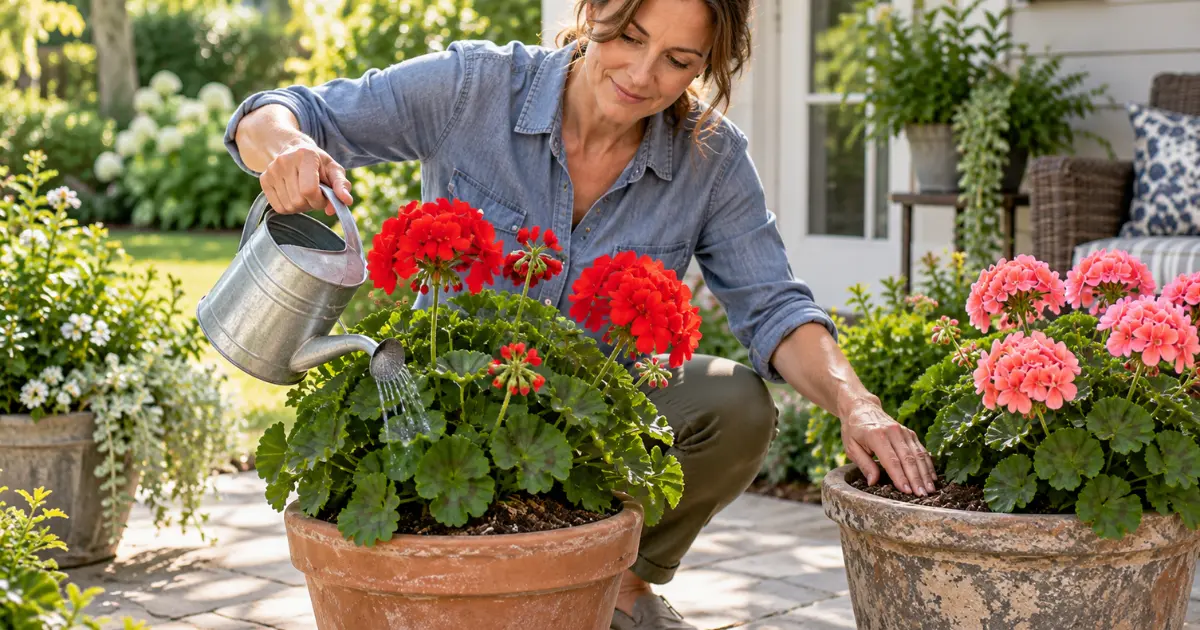
Water until the root ball is adequately moistened and excess water can drain from the pot. Then allow conditions to guide the next watering. A small pot in sun and wind can dry much faster than a large pot in a sheltered position.
Avoiding Overwatering
Do not keep geranium roots continuously saturated. Iowa State identifies overly wet soil, poor drainage, and excessive watering as factors associated with root and stem rot.
Wilting does not always mean a plant is dry. If a geranium is wilting while the soil is still wet, check drainage and root-zone conditions before adding more water. Yellowing leaves can also have multiple causes, so use the whole plant and soil condition as clues.
How to Fertilize Geraniums
Geraniums can benefit from regular nutrition, especially when they are flowering heavily or growing in containers where nutrients can be lost through repeated watering. Iowa State recommends regular fertilization for annual geraniums and offers both water-soluble and slow-release approaches for container plants.
The safest geranium care principle is to follow the fertilizer label and respond to the growing situation rather than assuming that a stronger dose will produce more flowers.
Feeding Geraniums in Garden Beds
Garden soil may already contain useful nutrients, so feeding should account for soil fertility, previous amendments, and plant performance. If the bed has known fertility problems, a soil test can provide better direction than repeated guesswork.
Avoid heavy feeding simply because flowering has slowed. Light, heat, water stress, and spent flower clusters can all affect bloom.
Feeding Geraniums in Containers
Containers usually need more active nutrient management because repeated watering can leach nutrients from the potting mix. A slow-release fertilizer or appropriately diluted soluble fertilizer can work, depending on the product and the mix already in the container.
Check whether your potting mix already contains fertilizer before adding more. More is not automatically better, and overfertilization can stress roots or produce growth that does not solve the underlying problem.
Supporting Healthy Growth and Flowering
Healthy flowering depends on several parts of geranium care working together: adequate light, reasonable moisture, good drainage, suitable nutrition, and a plant that is not under severe environmental stress.
If flowers decline, do not reach immediately for fertilizer. First check whether light has changed, whether the plant is staying too wet or too dry, whether spent flower clusters remain, and whether the plant has become root-bound or stressed by weather.
Basic Factors That Support Flowering
Strong light is one of the most important flowering factors for common zonal geraniums. Consistent but not excessive watering and appropriate feeding also support active growth.
Flowering can still vary with cultivar and weather. Avoid promising uninterrupted bloom throughout summer because extreme heat, low light, stress, or other conditions can temporarily reduce flowering even when basic care is sound.
The Role of Deadheading
Deadheading means removing spent flower clusters. Iowa State recommends regular deadheading to prevent seed production, improve appearance, and encourage continued flowering; Illinois Extension likewise recommends deadheading to maintain flowering plants. Iowa State’s geranium flowering and deadheading guidance
For general geranium care, the important point is to remove faded flower clusters rather than leave them to decline on the plant. A detailed step-by-step cutting method belongs in a dedicated deadheading guide.
Pruning and Maintaining Geraniums
Routine maintenance keeps plants tidy and gives you opportunities to spot problems early. Remove obviously dead, broken, or badly damaged material with clean tools or fingers when appropriate.
Pruning is also useful when plants become stretched or leggy. The goal is not constant cutting but maintaining a healthy framework and responding when growth becomes weak or unbalanced.
Removing Yellow or Damaged Growth
One yellow leaf is not a diagnosis. Older leaves naturally age, while yellowing can also be associated with water stress, root problems, nutrient issues, or other causes.
Remove leaves that are fully yellow, badly damaged, or decaying, but also investigate why the change occurred if yellowing is widespread or continuing. Check soil moisture and drainage first because they are common, easy-to-assess factors.
For a more detailed troubleshooting process, our guide to yellow leaves on plants explains how to examine yellowing patterns and investigate watering, drainage, light, nutrient problems, and other possible causes before deciding what to do.
Managing Leggy Growth
Low light can encourage stretched growth, and older plants may develop longer, woody stems. Iowa State recommends pinching or pruning to help maintain compact, bushy growth.
If a plant repeatedly becomes leggy, improve the cause as well as the shape. Pruning a geranium that remains in insufficient light may give only temporary improvement.
Growing Geraniums in Pots
Pots are an excellent way to grow Pelargoniums on patios, porches, balconies, and steps. Container geranium care differs mainly because roots occupy a smaller, more changeable environment.
This section focuses on the container system itself; soil, watering, and feeding have already been covered above.
Choosing a Suitable Container
Choose a pot large enough to hold the plant comfortably without severely crowding the root system. Very small containers can dry quickly and may require more frequent attention.
Material matters too. Some containers lose moisture faster than others, and larger containers generally change moisture more slowly than small ones. The right choice is one you can manage reliably in your site.
Drainage and Container Placement
Drainage holes are essential. Do not let a decorative outer pot, saucer, or tray keep the root ball standing in water for long periods.
Place the container where the plant receives suitable light and where you can reach it easily for watering and maintenance. Watch reflective walls, pavement, and wind exposure because they can make a container hotter or drier than a nearby garden bed.
When a Geranium May Need Repotting
A geranium may need a larger container when roots become tightly crowded, growth stalls despite otherwise appropriate care, or the pot dries unusually fast because the root system occupies most of the available medium.
Repot into a clean container with drainage and fresh, suitable potting mix. Do not automatically jump to an oversized container; a moderate increase in root space is generally easier to manage than a very large mass of wet mix around a relatively small root system.
Growing Geraniums Outdoors in Garden Beds
Geraniums in beds benefit from the more stable moisture and temperature of a larger soil volume, but the site still needs good drainage and adequate light.
Plant only after local frost danger has passed. Give plants enough room for air movement, and avoid siting them where irrigation or rainfall leaves the soil continuously wet.
Once established, bed-grown plants usually need less frequent moisture checking than small containers, but drought, sandy soil, wind, and intense heat can still dry a garden bed quickly.
Geranium Care Through the Seasons
Seasonal geranium care is mostly about adjusting to changing weather, light, growth rate, and frost risk rather than rewriting the entire routine four times.
Spring
In spring, focus on transition. Wait until local frost danger has passed before setting common Pelargonium geraniums outdoors permanently.
If plants were overwintered indoors, acclimate them gradually to outdoor light and weather rather than moving them from indoor conditions directly into strong sun and wind. Refresh potting mix or repot when root crowding makes it necessary.
Summer
During active summer growth, monitor containers closely for moisture because heat and wind can speed drying. Continue appropriate feeding and remove spent flower clusters as needed.
If flowering declines during difficult weather, check the whole situation before changing fertilizer. Heat, water stress, root crowding, and light exposure can all influence performance.
Fall
As nights cool, reduce the assumption that plants need the same amount of water they used during hot summer weather. Continue checking moisture instead.
Common annual geraniums are frost-tender. If you want to save a plant, make your overwintering decision before a hard frost rather than after damage occurs.
Winter
In climates with freezing winter conditions, common Pelargonium geraniums should not be assumed to survive outdoors. Iowa State’s geranium overwintering guidance describes several indoor options, including keeping plants as potted specimens, taking cuttings, or storing suitable plants bare-root.
If keeping a potted plant growing indoors, give it bright light and water when the soil becomes dry rather than maintaining summer watering habits. Iowa State also notes that plants kept in insufficient indoor light can become tall and lanky.
Common Geranium Symptoms and What to Check First
Symptoms are clues, not automatic diagnoses. Use them to decide what to inspect next.
- Yellowing leaves → possible care factors: overly wet soil, natural aging, nutrient issues, root stress, or other problems. First check: soil moisture, drainage, and whether yellowing is isolated or spreading.
- Wilting → possible care factors: dry soil, excessively wet roots, heat stress, or root damage. First check: actual root-zone moisture before watering.
- Poor flowering → possible care factors: insufficient light, environmental stress, spent flowers, nutrition, or root crowding. First check: light exposure and overall plant condition.
- Leggy growth → possible care factors: insufficient light or aging growth. First check: whether the plant is stretching toward brighter light.
- Leaf spots or discoloration → possible care factors: leaf wetness, crowding, physical damage, pests, or disease. First check: whether symptoms are spreading and whether foliage has been staying wet.
- Dark or soft stem/root tissue with wet soil → possible care factors: chronic excess moisture or root/stem disease. First check: drainage and watering practices; severe cases may require accurate disease identification.
- Visible insects or feeding damage → possible care factors: an actual pest may be present, but identification matters before treatment. First check: inspect leaf undersides, stems, buds, and nearby plants.
If your geranium develops white specks, powdery patches, or cottony markings on its leaves, identify what you are seeing before applying any treatment. Our guide to white spots on leaves explains how to distinguish possible fungal growth, pests, mineral residue, and natural leaf markings so you can decide what action, if any, is appropriate.
Iowa State’s annual-geranium guidance notes that warm, wet, crowded conditions can favor bacterial leaf spot and that overly wet soil and poor drainage are associated with root and stem rots. Use those relationships as reasons to inspect conditions, not as permission to diagnose a disease from one symptom alone.
Common Geranium Care Mistakes
- Watering by calendar instead of checking moisture. The same schedule will not fit a small patio pot, a large container, and a garden bed through changing weather.
- Keeping roots constantly wet. Geraniums need moisture, but poor drainage and saturated conditions can contribute to root problems.
- Giving too little light. Weak, stretched growth and poor flowering often accompany insufficient light.
- Trying to solve every flowering problem with fertilizer. Light, water, heat, plant age, and deadheading can matter too.
- Overfeeding. Extra fertilizer does not guarantee more flowers and can create new stress.
- Ignoring root-space limitations in containers. A severely root-bound plant may dry quickly and struggle even when watering and feeding seem adequate.
- Using the same care through every season. Weather and growth rate change, so moisture use and maintenance needs change too.
- Assuming every “geranium” needs identical care. Pelargonium bedding geraniums, hardy Geranium species, and specialized Pelargonium groups are not interchangeable.
- Treating yellow leaves or wilting as a diagnosis. Symptoms can have several causes; inspect moisture, drainage, light, roots, and pest signs before acting.
Avoiding these mistakes makes geranium care more responsive and less dependent on rigid rules.
Frequently Asked Questions About Geranium Care
Do geraniums need full sun?
Common zonal geraniums generally flower best in strong light. Iowa State recommends full sun and uses at least six hours of direct sun as its regional guideline, while noting that less sun can reduce flowering. In very hot or exposed sites, judge plant response and local conditions rather than treating one number as universal.
How often should you water geraniums?
There is no single schedule. Check the soil or potting mix and water according to actual moisture, weather, and whether the plant is in a container or the ground. Containers usually need more frequent checking.
Do geraniums grow better in pots or in the ground?
Both can work well. Pots offer flexibility and easier movement, while garden beds provide a larger root zone and often more stable moisture. Success depends more on appropriate light, drainage, watering, and general geranium care than on one method being universally superior.
How do you keep geraniums blooming all summer?
Provide strong light, appropriate moisture, suitable nutrition, and routine maintenance such as removing spent flowers. Even with good care, flowering can vary with cultivar, heat, and other environmental stress, so continuous bloom cannot be guaranteed everywhere.
Do geraniums need fertilizer?
Geraniums often benefit from feeding, particularly in containers. The appropriate product and schedule depend on the growing medium, existing fertility, and product instructions. Avoid assuming more fertilizer will always produce better flowering.
Can geraniums survive winter outdoors?
Common Pelargonium geraniums are frost-tender and should not be assumed to survive freezing winters outdoors. In cold-winter regions, gardeners who want to keep them can overwinter plants indoors using several methods. In mild climates, local conditions may be different, so use regional guidance.
Why are my geranium leaves turning yellow?
Yellow leaves can result from several causes, including normal leaf aging, excess moisture, root stress, nutrition, or other plant-health problems. Check soil moisture and drainage first, then look at whether the symptom is widespread and whether other signs are present.
Give Your Geraniums the Care They Need
Good geranium care comes from matching a few core needs to the conditions in front of you. Give common Pelargonium geraniums strong light, a well-drained root zone, water based on actual moisture, and nutrition that matches the growing situation. Remove spent or damaged growth when useful, watch for root crowding in pots, and adjust your routine as weather and seasons change.
The most important habit is observation. A geranium in a sunny container during hot weather will not behave exactly like one in a garden bed during a cool, rainy week. When you respond to the plant and its environment instead of forcing it onto a fixed schedule, healthy growth and dependable flowering become much easier to manage.

